
Sometimes the most interesting parts of a landscape are the details that make us stop and ask, Why was this designed this way?
Walking through an urban area on a warm day, one feature stood out: a shaded planter with an olive tree surrounded by bird-deterrent spikes. These devices are commonly used to discourage birds or other wildlife from gathering in certain locations, but in this case, the purpose wasn’t immediately obvious.
Perhaps the spikes were intended to discourage birds. Perhaps they were installed to protect landscaping. Or perhaps the design was meant to discourage people from sitting on the planter in a heavily used public space.
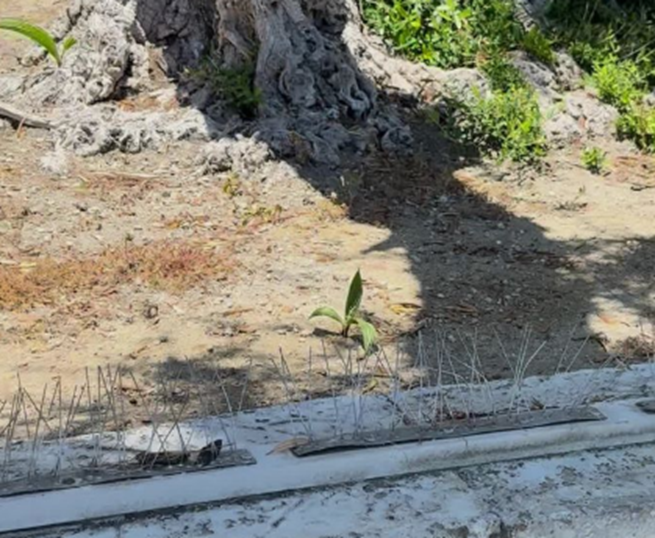
Without knowing the original design intent, it would be impossible to say with certainty.
That uncertainty highlights an important aspect of infrastructure and environmental planning. Every design decision is typically made to balance multiple objectives. Safety, maintenance, accessibility, durability, environmental performance, and public use often influence even the smallest details within a project.
A planter is more than a place for a tree. It becomes part of how people move through a space, where visitors choose to stop, how landscapes are maintained, and how wildlife interacts with the built environment.
Scientific and engineering decisions often involve these kinds of tradeoffs. Solutions that appear simple on the surface may reflect careful consideration of long-term maintenance, human behavior, environmental conditions, or operational requirements.
The observation also served as a reminder of something else. On a hot afternoon, the shade beneath the tree was inviting. Whether intentionally or not, the planter had become a place where someone naturally wanted to pause.
Sometimes the most valuable observations begin not with an answer, but with a question. Looking a little closer at the built environment encourages a deeper appreciation for the thought, and the tradeoffs, that often shape the places we use every day.
Want to dive deeper into this topic? Watch our full video breakdown here: Link here