
Not all infrastructure looks like concrete channels, pipes, or utility corridors.
Sometimes, infrastructure becomes a place where people gather, wildlife thrives, and the surrounding environment benefits at the same time.
Walking through Tanner Springs Park in Portland’s Pearl District, it’s easy to notice the peaceful atmosphere before realizing the park is also performing an important environmental function. Built on a former industrial site, the park was designed to help manage stormwater while creating a welcoming public space.
Throughout the park, native vegetation helps filter stormwater as it moves through the landscape. Some pathways are constructed with permeable surfaces that allow rainwater to soak into the ground rather than immediately running off into storm drains. Water circulates through ponds, where natural processes and carefully selected plant communities help improve water quality.
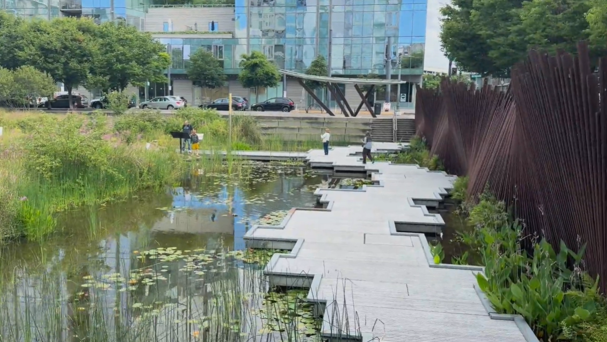
These features are working quietly in the background, but they are only part of what makes the park successful.
Every visit revealed people enjoying the space. Some were walking, others were sitting quietly, and families stopped to watch the ducks moving through the water. Interpretive signs explained how the park functions while encouraging visitors to help protect the surrounding habitat. The result is a landscape that not only manages stormwater but also encourages people to better understand the systems around them.
Projects like this demonstrate that infrastructure can serve more than one purpose. A stormwater facility can improve water quality while creating habitat for wildlife. Trees and vegetation provide shade, support biodiversity, and help manage rainfall. Public spaces designed with natural systems in mind can offer moments of restoration within busy urban environments.
Perhaps the most valuable aspect of places like Tanner Springs Park is that the engineering doesn’t demand attention. Visitors are free to enjoy the landscape first, discovering over time that many of the features contributing to the park’s beauty are also supporting healthier water systems.
That quiet integration of infrastructure, ecology, and community is a reminder that thoughtful design can create places that are both functional and inviting. Sometimes, the best infrastructure is the kind that simply feels like part of the landscape.
▶️ Watch here
Learn more about Watearth at our homepage.