
Most drinking fountains are designed with people in mind.
Occasionally, however, infrastructure attracts unexpected users.
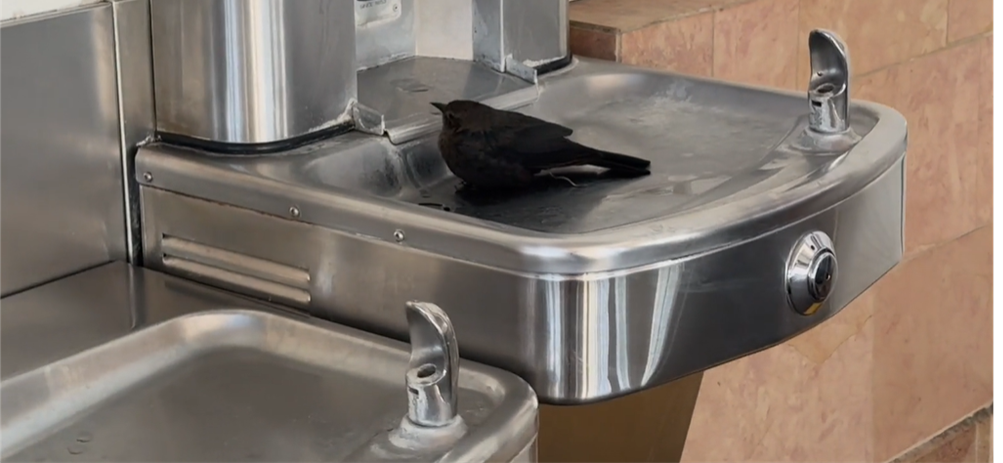
While passing a public drinking fountain recently, a small bird had settled into the basin, using the
remaining water much like a bird bath. The scene was simple: a bit of water, a quiet moment, and a
reminder that infrastructure often interacts with the surrounding environment in ways that
designers never fully anticipate.
The bird appeared comfortable, resting quietly in the shallow water collected in the fountain. There
was a moment of hesitation about approaching too closely. Adding more water might have been
helpful, but it also might have disturbed the bird. Sometimes observation is enough.
What makes moments like this interesting is that they reveal how infrastructure exists within larger
systems. A drinking fountain is designed to provide water for people, but the fountain also
becomes part of the surrounding environment. Birds, insects, trees, and other wildlife regularly
interact with the same infrastructure that communities build for human use.
Most public infrastructure serves a specific purpose. Drinking fountains provide water. Storm drains move runoff. Sidewalks support pedestrian travel. Street trees provide shade. Yet once infrastructure is placed into a real environment, the boundaries between human systems and natural systems become less distinct.
A small amount of water in a fountain basin can become a resting place for a bird. A stormwater facility can create habitat. A tree planted for shade can support wildlife while also improving neighborhood comfort. These interactions are often minor, but they are reminders that infrastructure rarely operates in isolation.
Observations like this are easy to overlook because they do not appear in design manuals, construction drawings, or maintenance plans. Yet they are part of the everyday relationship between built environments and natural systems.
Not every observation needs to lead to a recommendation or a conclusion. Sometimes there is value in simply noticing what is happening.
In this case, a drinking fountain became something more than a drinking fountain for a few moments. A piece of public infrastructure provided a small refuge, and a quiet interaction revealed how closely connected human-built systems and the natural world can be.
Watch here
Learn more about Watearth at our homepage.