
Habitat islands are an increasingly common feature in urban lakes, stormwater facilities, and restored waterways. Designed to support wildlife and improve ecological function, these landscapes demonstrate how thoughtful planning can create environmental and community benefits at the same time.
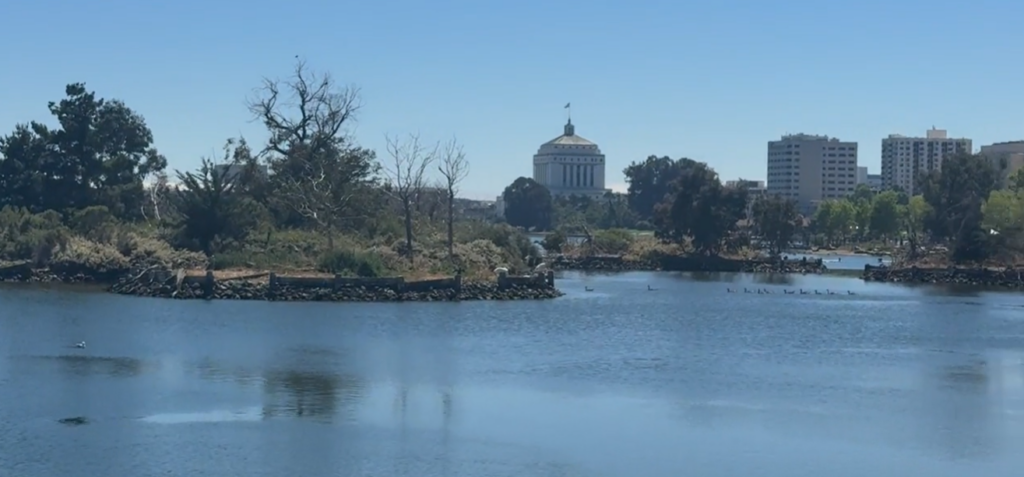
Looking across the water, the habitat islands are clearly attracting wildlife. Large groups of Canada geese have gathered on the islands, in the water, and throughout the surrounding park. For many visitors, the birds are part of the experience. Children stop to watch them, dogs become curious, and people enjoy seeing wildlife thriving within an urban setting.
The same observations, however, reveal an important scientific consideration.
As wildlife populations grow, so do their interactions with the surrounding environment. Large concentrations of waterfowl can contribute additional nutrients to lakes and ponds, influence vegetation, and affect how public spaces are maintained and enjoyed. These ecological responses are not unexpected, they are part of the dynamic relationship between habitat, water, and wildlife.
Understanding those relationships is an important part of environmental planning.
Designing successful water resources projects requires more than constructing ponds, wetlands, or habitat features. Long-term performance depends on understanding how ecological systems will respond over time. Wildlife behavior, water quality, vegetation, hydrology, and maintenance all become interconnected parts of the same system.
This is where scientific expertise adds lasting value. Environmental science, hydrology, and hydraulic analysis help identify how natural processes may influence a site’s long-term function before challenges become more difficult to address. Considering these interactions during planning supports more resilient infrastructure, healthier ecosystems, and more sustainable management strategies.
Observations made in the field often provide the first clues. A flock of geese gathering around newly created habitat is more than an interesting sight, it is a reminder that every environmental project continues to evolve long after construction is complete.
Successful projects are not measured only by what is built. They are measured by how well the natural and engineered systems continue to function together over time.
Embedded Video here
Learn more about Watearth at our homepage.